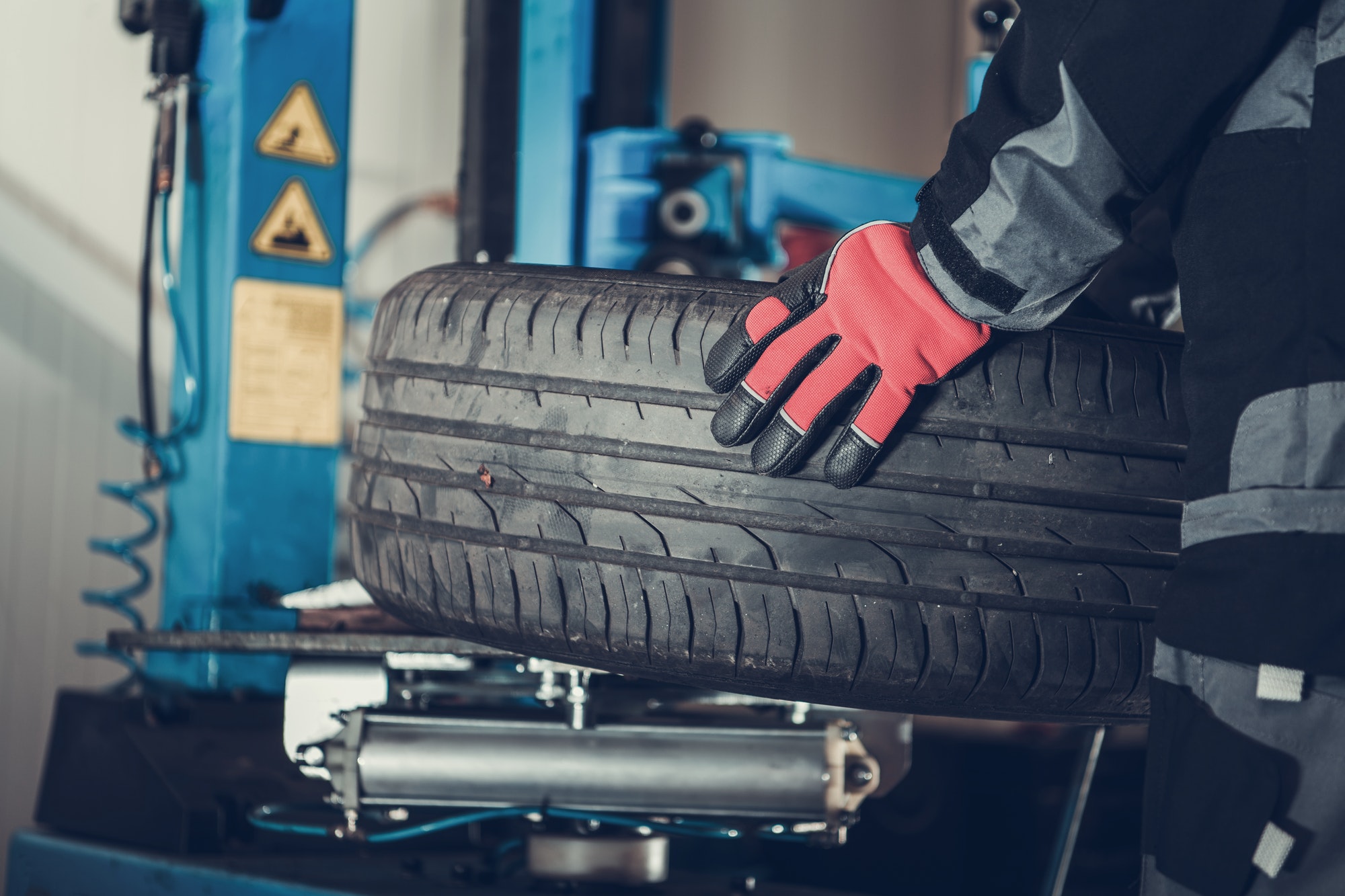
If your tire pressure warning light came on during the first cool morning of the season, you're not alone, and it's not necessarily a leak. Air contracts as it cools, so tire pressure drops when the temperature does: roughly 1 PSI for every 10°F. A 40-degree swing from a warm afternoon to a cold morning can take a tire from just right to low enough to trigger the warning.
What the TPMS light is telling you
Every car sold in the U.S. since the 2008 model year has a tire pressure monitoring system (TPMS). The warning light comes on when a tire is significantly underinflated, typically about 25% below the recommended pressure. By the time you see it, the tire has been low for a while.
Sometimes the light goes off on its own after a few miles as the tires warm up. That doesn't mean the problem is solved. It means the tires are low every time they're cold. Add air.
How to set your tire pressure correctly
- Find the right number. It's on the sticker inside the driver's door jamb, not on the tire sidewall. The sidewall number is the tire's maximum pressure.
- Check when the tires are cold: before driving, or after the car has been parked for a few hours. Driving warms the air and gives a falsely high reading.
- Check all four tires, plus the spare if your car has one. Spares lose pressure too, and you'll only find out when you need it.
- Recheck after big temperature drops. A pressure that was perfect in September may be low by November.
Why underinflated tires matter
Low tire pressure isn't just about a warning light. Underinflated tires:
- Take longer to stop and don't grip as well in the rain
- Wear faster, especially on the outer edges
- Run hotter, which increases the risk of a blowout
- Cost you money at the pump through lower fuel economy
While you're at it: check your tread
Georgia law requires at least 2/32 of an inch of tread. The classic penny test is easy: put a penny into the tread with Lincoln's head upside down. If you can see the top of his head, your tread is at or below 2/32" and it's time for new tires.
For wet-weather grip, many tire experts recommend replacing tires before they get that low. Try the same test with a quarter. If you can see the top of Washington's head, you're under 4/32" and your tires won't clear water as well on rainy Atlanta-area roads.
When the light won't go off
If you've filled all four tires and the light stays on, or keeps coming back, you may have a slow leak from a nail, a damaged valve stem, or a leaking wheel. A flashing light points to a sensor problem. Either way, we can find the cause. See our tire repair and replacement and tire rotation services, or ask us to check your wheel alignment if your tires are wearing unevenly.
Book an appointment or call 678-795-0331
Frequently Asked Questions
Is it safe to drive with the tire pressure light on?
You can usually drive a short distance carefully to add air, but don't ignore it. The light means at least one tire is significantly underinflated, which hurts handling and braking and can damage the tire. Check and fill all four as soon as you can.
What should my tire pressure be?
Use the pressure on the sticker inside the driver's door jamb (or in your owner's manual). The number on the tire's sidewall is the maximum the tire can hold, not the recommended pressure for your vehicle.
Why is my tire pressure light flashing?
A light that flashes for a minute or so after you start the car and then stays on usually means a problem with the monitoring system itself, such as a failed sensor, rather than low pressure. Have the system checked so it can warn you when it matters.