If you hit a pothole hard, watch for these signs over the next few drives: the car pulls to one side, the steering wheel is off-center, there's a new vibration, or you see a bulge in the tire sidewall. Any one of them means the hit did more than rattle your coffee, so it's worth an inspection. Here's what to look for and why it matters.
Why winter brings potholes
Georgia winters swing above and below freezing. Water seeps into cracks in the pavement, freezes and expands, then thaws and leaves a gap. Traffic breaks the weakened surface apart, and a pothole appears, often after a cold snap or a stretch of rain.
6 signs of pothole damage
1. The car pulls to one side
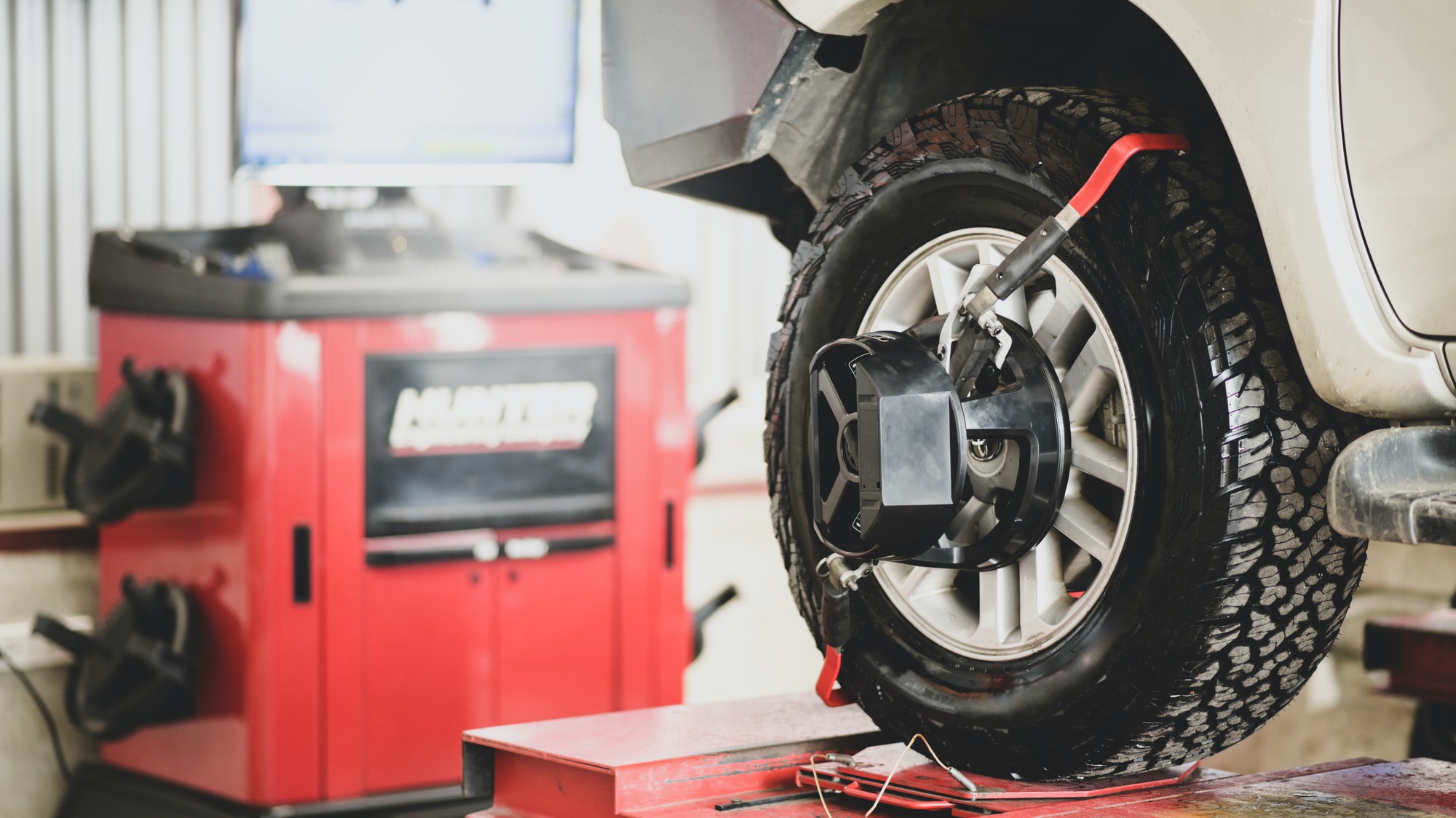
If you have to hold the wheel slightly to one side to drive straight, the alignment has likely shifted. Driving like that wears tires out early and unevenly.
2. The steering wheel is off-center
When you're driving straight and the logo on the wheel is tilted, the alignment is off, even if the car doesn't pull much yet.
3. A new vibration
A shake at certain speeds can mean a bent wheel, a tire that's been knocked out of balance, or internal tire damage. Note the speed where it starts and mention it when you come in.
4. A bulge or bubble in the sidewall
A hard hit can pinch the tire against the rim and break the cords inside. The result is a bulge on the sidewall. Don't drive on a tire with a bulge at highway speed. It can fail suddenly.
5. A dented or cracked rim
Look at the edge of the wheel where it meets the tire. A dent can cause a slow leak, so a tire that keeps losing air after a pothole hit is a clue. Our tire repair services can find and fix a slow leak.
6. New clunks, bouncing, or a lower stance
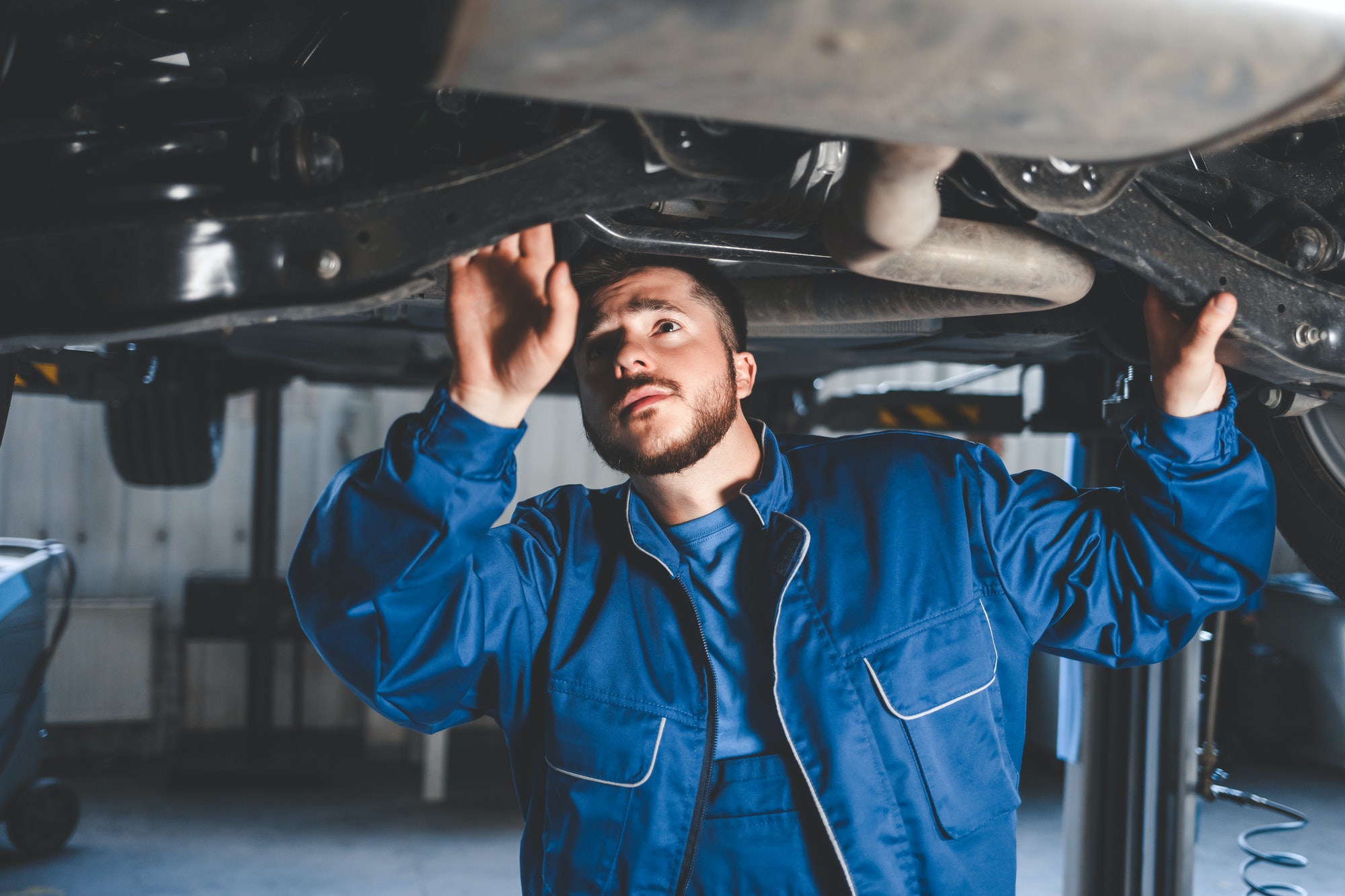
Clunking over bumps, extra bouncing, or one corner of the car sitting lower can mean a damaged shock, strut, or other suspension part.
What to do after a hard hit
- Pull over safely if the car feels different, and look at the tire and wheel on the side that took the hit.
- Check your tire pressure over the next day or two for slow leaks.
- Pay attention to how the car drives for the next few days.
- Report the pothole. City streets are handled by your city. On state highways, you can report it to Georgia DOT by calling 511.
How to avoid pothole damage
- Keep your tires at the pressure on your driver's door jamb. Underinflated tires are more easily damaged.
- Leave more following distance so you can see holes in time.
- If you can't avoid one, slow down before it and release the brake just before the hit, so the suspension can absorb it.
- Be careful with puddles. They can hide deep holes.
Get it checked
If your car has been driving differently since a pothole, we can check your tires, wheels, suspension, and alignment and tell you exactly what was damaged, if anything. Learn more about our wheel alignment and suspension and steering services, or book an appointment.
Book an appointment or call 678-795-0331
Frequently Asked Questions
Does every pothole hit throw off the alignment?
No. Many hits do no lasting harm. A hard hit at speed or into a deep, sharp-edged hole is more likely to bend a part or shift the alignment. If the car drives differently afterward, have it checked.
Is a bulge in the tire sidewall dangerous?
Yes. A bulge means the tire's internal structure is damaged, and it can fail without warning. Put the spare on, or have the tire looked at before driving on it at highway speed.