Most brake problems announce themselves early, through a sound, a feeling in the pedal, or a warning light. If you notice grinding, a soft or sinking pedal, a red brake warning light, or a car that pulls hard when you stop, get it checked right away. Squealing and mild vibration give you a little more time, but not much. Here's what each sign means.
1. A high-pitched squeal when you brake
Many brake pads have a small metal tab, called a wear indicator, that squeals against the rotor once the pad gets thin. It's designed to be annoying on purpose. A squeal on the first few stops of a cold, damp morning can be harmless surface rust, but a squeal that keeps coming back is your cue to book an inspection soon.
2. Grinding or growling
Grinding usually means the pad material is gone and metal is rubbing on metal. That damages the rotors quickly and reduces your stopping power. Don't wait on this one.
3. A pulsing or vibrating pedal
If the brake pedal or steering wheel shudders when you slow down from highway speed, the rotors are often worn unevenly. It's not an emergency, but it gets worse over time and makes stops less smooth and less predictable.
4. A soft, spongy, or sinking pedal
A pedal that feels mushy or slowly sinks toward the floor can point to air in the brake lines, a fluid leak, or a problem with the master cylinder. This one can't wait. Have the car checked before you drive it further than you have to.
5. The car pulls to one side when you stop
Pulling while braking can come from a sticking caliper, a collapsed brake hose, or uneven pad wear. It can also be a tire or alignment issue, which is one more reason to have it looked at instead of guessing.
6. A brake warning light on the dash
A red BRAKE light can mean the parking brake is on, the fluid is low, or there's a hydraulic problem. An amber ABS light means the anti-lock system has a fault: your regular brakes usually still work, but you won't have anti-lock help on wet or icy roads.
7. A burning smell or a hot wheel after driving
A sharp, hot smell after normal driving (not a long mountain descent) can mean a caliper is dragging. That wears pads fast and can overheat the brakes. If you notice one wheel is much hotter or dustier than the others, mention it when you come in.
Don't forget the brake fluid
Brake fluid absorbs moisture over time, which lowers its boiling point and can corrode parts inside the system. Many manufacturers recommend replacing it every two to three years, so check your owner's manual for your car's schedule.
Get your brakes checked
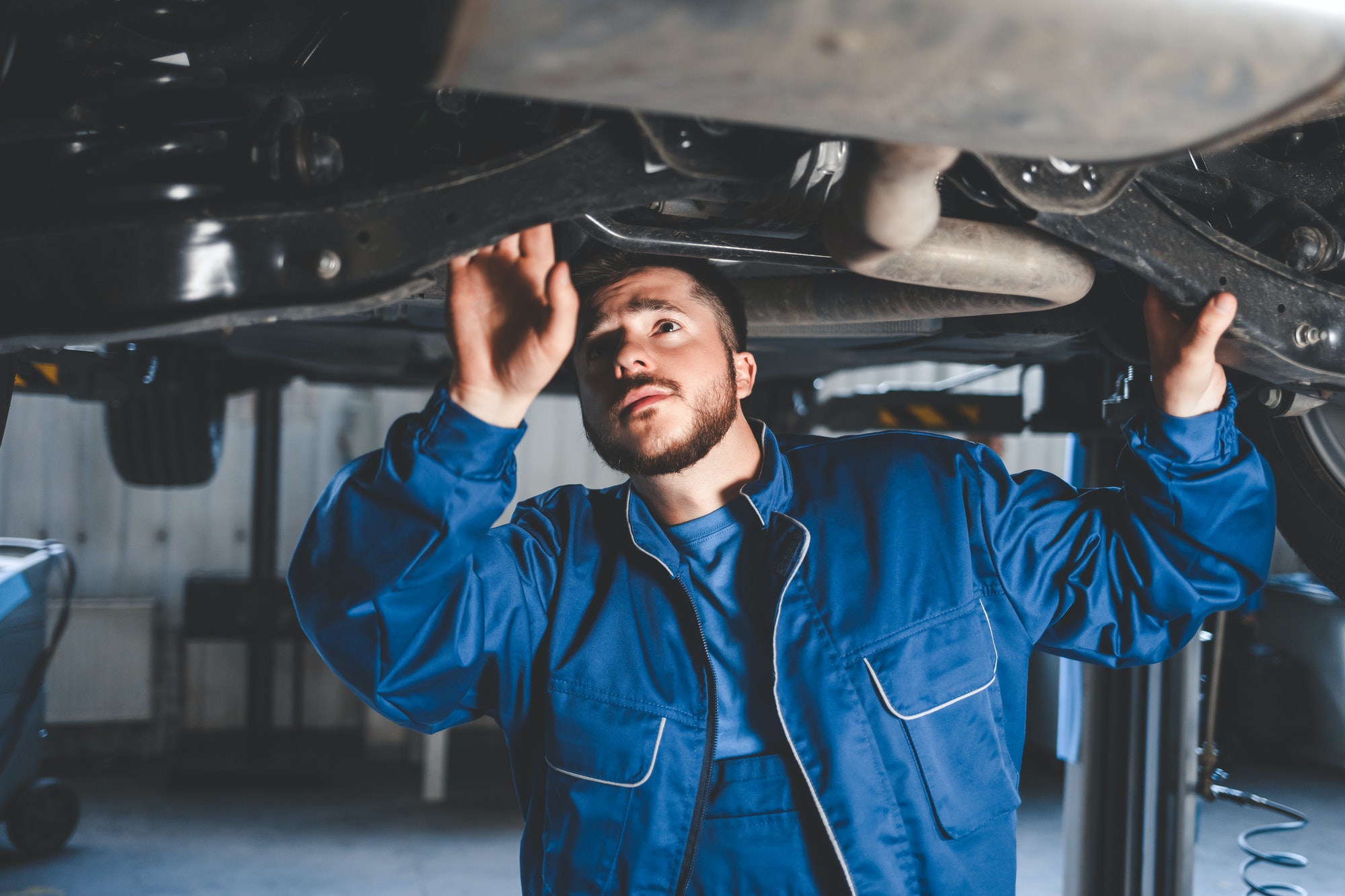
Brakes are the one system you never want to put off. If you've noticed any of these signs, our technicians can inspect your pads, rotors, lines, and fluid and tell you what needs attention now and what can wait. Learn more about our brake repair services or book an appointment.
Book an appointment or call 678-795-0331
Frequently Asked Questions
How long do brake pads last?
It depends on the pads, the vehicle, and how you drive. Many last somewhere between 30,000 and 70,000 miles, but stop-and-go traffic and hilly routes wear them faster. An inspection measures how much pad is left, so you're not guessing.
Is it safe to drive with the brake warning light on?
Treat a red brake light as urgent. First make sure the parking brake is fully released. If the light stays on, it can mean low brake fluid or a hydraulic problem, so have it checked before you drive any distance.